
Russell Westbrook ended an 18-season NBA career on August 12, 2026, announcing his retirement in a social media video rather than a press conference — closing the book on one of the most physically dominant and statistically unmatched careers the point guard position has ever seen. He leaves the game as the NBA’s all-time leader in triple-doubles, a former MVP, and a nine-time All-Star, having played through three distinct eras of the league: the young-core Thunder teams of the early 2010s, his solo MVP peak after Kevin Durant’s departure, and a long, well-traveled final act as a veteran role player across six more franchises. Beyond the stat sheet, he also reshaped how NBA players think about personal style off the court, becoming one of the league’s most recognizable fashion figures during an era when athletes were only beginning to treat pregame arrival outfits as a form of self-expression. Here’s a full look at who Russell Westbrook is, how his career unfolded, and how it came to an end.
Who Is Russell Westbrook?
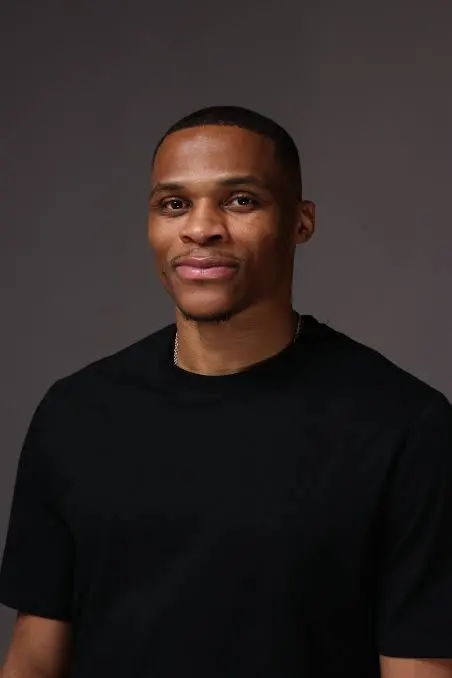
Russell Westbrook is a 37-year-old American professional basketball player who spent 18 seasons in the NBA, most notably as the face of the Oklahoma City Thunder during the franchise’s most competitive stretch. Born November 12, 1988, in Long Beach, California, and listed at 6-foot-4, Westbrook built his legacy on speed, power, and an almost obsessive commitment to the triple-double — the feat of reaching double digits in points, rebounds, and assists in a single game. By the time he retired, he had done it more times than any player in NBA history, and by a wide margin.
From UCLA to the NBA Draft
Westbrook attended Leuzinger High School in Lawndale, California, before playing two seasons of college basketball at UCLA, a program within driving distance of where he grew up. He wasn’t a nationally hyped recruit heading into college, and his draft stock rose quickly late in his sophomore season as scouts became convinced his athleticism and defensive intensity would translate to the next level — a reputation he backed up by winning Pac-10 Defensive Player of the Year and earning a spot on the conference’s All-Defensive Team in 2008. The Seattle SuperSonics selected him fourth overall in the 2008 NBA Draft — but that same offseason, the franchise relocated to Oklahoma City and became the Thunder, meaning Westbrook’s entire rookie campaign unfolded under a new name in a new city. He made the NBA All-Rookie First Team in 2009 and became a founding cornerstone of the rebuilt franchise almost by accident of timing, paired from the start with another young building block, Kevin Durant, who had arrived a year earlier.
The Oklahoma City Years: Building a Contender
Westbrook spent his first 11 seasons with the Thunder, forming one of the most talented young cores in the league alongside Durant and, briefly, James Harden, who came off the bench as a rising sixth man. That trio helped carry Oklahoma City to the 2012 NBA Finals, where Westbrook averaged 27.0 points, 6.6 assists, and 6.4 rebounds across the series, but the Thunder fell in five games to a LeBron James-led Miami Heat team, with James recording a triple-double of his own in the closing 121-106 Game 5 loss. It remains the closest Westbrook ever came to an NBA championship, and the “what if” of that young core staying together longer has followed his career narrative ever since. Across his 11 seasons in Oklahoma City, Westbrook appeared in 98 playoff games — tied for the most in franchise history — averaging 25.4 points, 7.0 rebounds, 7.9 assists, and 1.9 steals along the way, numbers that place him among the most productive playoff performers the Thunder/SuperSonics franchise has ever had.
The following offseason, Harden was traded to Houston after contract extension talks stalled, where he’d go on to build an MVP-caliber career of his own. Durant stayed several more years, helping the Thunder reach the Western Conference Finals again in 2016, before leaving for the Golden State Warriors that summer in search of the title that had eluded him in Oklahoma City. Westbrook stayed — and responded with the signature season of his career.
The 2016-17 MVP Season
With Durant gone and the roster thinner than it had been in years, Westbrook took on a workload few players in NBA history have carried. He averaged 31.6 points, 10.7 rebounds, and 10.4 assists across the 2016-17 season, becoming the first player since Oscar Robertson in 1961-62 to average a triple-double over a full year. He also set the single-season triple-double record with 42, a mark that still stands. The performance included a career-high 58-point game against Portland, and it earned him the 2017 NBA MVP award, unanimously — a rare individual honor for a player whose team was eliminated in the first round of the playoffs that same season, underscoring just how much value voters placed on his statistical dominance.
Westbrook would go on to average a triple-double for the season three more times in his career, including a 2020-21 campaign with the Washington Wizards in which he broke Oscar Robertson’s all-time career triple-double record. That stretch featured one of the most jaw-dropping box scores of his career: a 14-point, 21-rebound, 24-assist triple-double, one of the most statistically extreme lines the league has ever seen from a guard. That level of statistical consistency, stacked on top of his 2017 campaign, cemented his reputation as one of the most singular offensive engines the league has seen.
Durability and Signature Streaks
Westbrook’s consistency wasn’t just about hitting triple-doubles individually — it was about how often he strung them together, and how rarely he missed games at all. During a five-game stretch in December 2016, he became the first player to record five consecutive triple-doubles since Michael Jordan reeled off seven straight in 1989, a run that included a 28-point, 17-rebound, 12-assist performance against New Orleans. Durability was just as central to his game: early in his career, Westbrook built a reputation as one of the league’s true iron men, at one point playing 374 consecutive games — the longest active streak in the NBA at the time — before a knee injury in the 2013 playoffs finally ended the run. That combination of nightly availability and nightly production is a big part of why his counting stats climbed as high as they did.
The Journeyman Years
Westbrook’s career, season by season by team, ran as follows: Oklahoma City Thunder (2008-2019), Houston Rockets (2019-2020), Washington Wizards (2020-2021), Los Angeles Lakers (2021-2023), Los Angeles Clippers (2023-2024), Denver Nuggets (2024-2025), and finally the Sacramento Kings (2025-2026). In Houston, reunited with Harden, he posted one of the most prolific scoring seasons of his post-Thunder career, though pairing two ball-dominant, high-usage stars in the same backcourt was never entirely seamless, and the experiment lasted just one season before Westbrook was moved again. His time with the Lakers alongside LeBron James and Anthony Davis is widely regarded as the roughest stretch of his career from a fit standpoint, with his ball-dominant style clashing with an offense built around other stars, and a brief, games-only stop with the Utah Jazz as part of a 2023 trade before a buyout sent him to the Clippers instead — he never actually suited up for Utah.
He found steadier footing later on: in Denver during the 2024-25 season, playing a complementary role behind the Nuggets’ star core, he averaged 13.3 points, 6.1 assists, 4.9 rebounds, and 1.4 steals per game — modest by MVP-era standards, but efficient, low-turnover production that helped him stick in rotations well into his late thirties. He closed out his career in Sacramento, a rebuilding team that gave him a starting role for most of his final full season, averaging 15.2 points, 6.7 assists, 5.4 rebounds, and 1.3 steals across 64 games. It was, by any measure, a productive final season for a player nearing 40 — a fact that made his decision to walk away, rather than chase a 19th year, notable in its own right.
Career Stats and Records
Westbrook retires with career averages of 20.9 points, 8.0 assists, 6.9 rebounds, and 1.6 steals per game across 1,301 regular-season appearances, shooting 43.8% from the field, 30.8% from three, and 77.1% from the free-throw line. In 135 career playoff games, he averaged 22.5 points, 7.1 assists, and 6.7 rebounds. His full résumé includes:
- 209 career triple-doubles — the most in NBA history, ahead of Nikola Jokić’s 198. Westbrook broke Oscar Robertson’s previous record of 181 in 2021, a mark that had stood for 47 years.
- 2017 NBA MVP, won unanimously.
- Nine-time NBA All-Star (2011, 2012, 2013, 2015, 2016, 2017, 2018, 2019, 2020) and two-time All-Star Game MVP (2015, 2016).
- Nine All-NBA selections — two First Team (2016, 2017), five Second Team (2011-2013, 2015, 2018), two Third Team (2019, 2020).
- Two-time NBA scoring champion (2015, 2017) and three-time assists leader (2018, 2019, 2021).
- NBA All-Rookie First Team (2009) and NBA 75th Anniversary Team honoree (2021).
- Two Olympic gold medals with Team USA — the 2010 World Championship and the 2012 London Olympics.
- 5th all-time in career assists (10,351) and 14th all-time in points scored (27,176).
According to Spotrac, Westbrook earned approximately $349.5 million in career salary across his 18 NBA seasons — a reflection of just how long he sustained All-Star-level production at one of the league’s most physically demanding positions.
International Career with Team USA
Westbrook’s international career ran alongside his NBA rise. He was part of the Team USA roster that won gold at the 2010 FIBA World Championship in Turkey, one of the deeper and more experienced American national team rosters of that era, and followed it two years later with an Olympic gold medal at the 2012 London Games as part of a U.S. squad loaded with All-Stars. Both tournaments came during the same stretch that included his rise to stardom with the Thunder, and both wins are frequently cited alongside his NBA honors as evidence of his standing among his era’s elite guards, even without an NBA championship to match them.
Late-Career Milestones
Even in his final seasons as a role player rather than a star, Westbrook kept adding to his statistical legacy. While with the Clippers, he became just the third player in franchise history to post 23-plus points, nine rebounds, and six assists off the bench in a single game, and he later authored one of the most complete stat lines in franchise history: 16 points, 15 rebounds, and 15 assists in a win over Phoenix, becoming the first Clippers player ever to reach 15-plus in all three categories in one outing. That same season, a 23-point performance in Detroit made him just the 25th player in NBA history to reach 25,000 career points, and he passed Jerry West for sole possession of 24th place on the league’s all-time scoring list along the way. Milestones like these, arriving well past his statistical peak, underscored just how long and durable his career had been — a nearly two-decade run in which he rarely looked like a player just accumulating counting stats for their own sake, even in seasons where his team’s win total said otherwise.
Beyond Stats: The Westbrook Style Revolution
Long before “self-expression” became a normalized part of NBA culture, Westbrook was pushing against the league’s dress code with loud, unconventional outfits at arena entrances and postgame media sessions — a habit that drew as much commentary from fashion press as from sports media. He signed with Nike’s Jordan Brand in 2012, becoming a headline athlete for the annual Air Jordan release, and in 2015 released the Westbrook 0, a lifestyle sneaker that broke from convention by being his first signature shoe despite not being a performance basketball shoe at all.
In 2018, he launched his first true on-court signature line, the Why Not Zer0.1, named after his personal motto. Westbrook has said the phrase “Why not?” has shaped his mindset both on the court and off it, and it became the throughline for a shoe series that ran to six models, each defined by unconventional colorways, handwritten “Why Not?” lettering, and design details tied to his personal history — including a tribute colorway honoring a close friend and former teammate. The fashion world largely embraced Westbrook’s choices as a sign of authenticity, even as parts of the sports media questioned them, and his influence is frequently cited as part of a broader shift toward athletes treating personal style as an extension of their brand.
On-Court Intensity and Public Incidents
Westbrook’s on-court intensity occasionally spilled into confrontations with fans, most notably during multiple incidents with Utah Jazz spectators in 2018 and 2019. In the 2019 case, Westbrook directed profanity at a courtside fan and the man’s wife after saying they told him to “get down on your knees like you’re used to” — a comment Westbrook described as racially charged. The Jazz investigated and permanently banned the fan, and the NBA fined Westbrook $25,000 for directing threatening language toward a spectator. The fan later sued the team and denied any racial intent; the lawsuit was ultimately dismissed. The episodes became a recurring flashpoint in a broader league conversation about player-fan conduct during Westbrook’s playing years. On the court, his consistency continued to produce milestones large and small — in March 2018, a 32-point, 12-assist, 12-rebound outing against Atlanta made him just the fourth player in NBA history to reach 100 career triple-doubles, a number that, at the time, still felt remarkable rather than routine.
How Westbrook Announced His Retirement
Rather than a press conference or a traditional statement, Westbrook posted a roughly three-and-a-half-minute video to social media on August 12, 2026, narrated by actor Michael B. Jordan. Westbrook never speaks in the video himself; the film shows him watching highlights from his own career before turning toward what comes next — mentorship, his foundation, and the young players who grew up wanting to play like him. Alongside the video, he wrote: “You had to be there. And now it’s over.”
The timing surprised much of the league. According to ESPN’s Shams Charania, Westbrook had contract offers on the table this offseason from both the Sacramento Kings and the Washington Wizards, but chose to walk away on his own terms rather than sign on for an 18th season. Reaction across the NBA was immediate, with current and former players and analysts marking the end of his run publicly, many pointing to his sustained intensity as a defining trait few players in league history have matched over so many seasons.
What’s Next: Hall of Fame and Legacy
Westbrook becomes eligible for the Naismith Memorial Basketball Hall of Fame five years after his final season, and few expect his case to be in doubt — an MVP award, nine All-Star nods, an all-time record, and a spot on the NBA’s 75th Anniversary Team is about as clear-cut a résumé as the Hall considers. His 209 triple-doubles put him in a category by himself: Magic Johnson, one of the players most associated with the feat before Westbrook’s era, finished his career with 138. Only Nikola Jokić, still active and sitting at 198 entering the coming season, has any realistic path to challenging the record — and even that would require several more highly productive seasons. LeBron James, by comparison, retires (whenever that day comes) with a triple-double total nowhere near Westbrook’s pace, a reminder of just how specific a skill set — high usage, ball-dominant guard play, and a willingness to chase rebounds from the perimeter — the record actually demands. Beyond the court, Westbrook has spent years building out philanthropic work through his Russell Westbrook Why Not? Foundation, and has signaled that mentorship and off-court community work will be a continued focus in retirement.
The lack of a championship will likely remain the one asterisk on an otherwise historic career. But for nearly two decades, Westbrook defined a particular kind of basketball intensity — one built on speed, force, and a refusal to let any game feel routine, paired with an equally fearless approach to expressing his identity off the court. He entered the league as a relatively unheralded UCLA product taken fourth overall in a draft remembered mostly for the top pick, and he leaves it as the answer to a statistical question — most career triple-doubles — that once seemed permanently attached to a player from a different basketball era entirely. That combination of longevity, productivity, and personality is the legacy he leaves behind, and it’s one future guards — the next generation of players who grew up idolizing his relentless, unapologetic style — will be measured against for years to come.
FAQ
When did Russell Westbrook retire?
He announced his retirement on August 12, 2026, after 18 NBA seasons, via a social media video rather than a formal press conference.
How many triple-doubles does Russell Westbrook have?
209 — the most in NBA history, ahead of Nikola Jokić’s 198 and well past Oscar Robertson’s old record of 181.
Did Russell Westbrook ever win an NBA championship?
No. His closest attempt came in 2012, when the Oklahoma City Thunder lost to the Miami Heat in the NBA Finals.
What teams did Russell Westbrook play for?
Seven franchises across his career, in order: the Oklahoma City Thunder (2008-2019), Houston Rockets (2019-2020), Washington Wizards (2020-2021), Los Angeles Lakers (2021-2023), Los Angeles Clippers (2023-2024), Denver Nuggets (2024-2025), and Sacramento Kings (2025-2026).
Is Russell Westbrook a Hall of Famer?
He’s not yet eligible — induction requires a five-year wait after retirement — but with an MVP award, nine All-Star selections, and the NBA’s all-time triple-double record, he’s widely expected to be a near-unanimous selection when eligible.
What shoe brand is Russell Westbrook associated with?
Jordan Brand. He signed with Nike’s Jordan Brand in 2012 and later launched his own signature line, the Why Not Zer0 series, in 2018.
Who holds the NBA record for most career triple-doubles now that Westbrook has retired?
Russell Westbrook still holds it, with 209. Nikola Jokić is the closest active player, with 198 heading into the coming season, but would need several more highly productive years to catch up.
Did Russell Westbrook win an MVP award?
Yes — the 2017 NBA Most Valuable Player award, won unanimously after he averaged a triple-double for the full 2016-17 season, becoming only the second player in NBA history to do so.